


Assistant Professor
Phone:
CUSAT IQAC Profile
https://iqac.cusat.ac.in/Web/profile_view/388/Dr.BHAVYABALANCHANDRIKABhavya
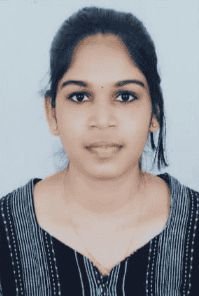
Dr. Bhavya Balan Chandrika earned her PhD from Rajiv Gandhi Centre for Biotechnology, Kerala, in 2012 and carried out post-doctoral training at the University of Arkansas for Medical Sciences, USA. She worked as Research Scientist at Inter University Centre for Biosciences at Kannur University, Kerala under DST-SERB young scientist start up grant in 2015. This project focussed on computer aided high throughput screening for phytochemicals and their derivatives against human breast cancers (HER2 positive and triple negative). Later she joined as Research Scientist at Child Development centre, Medical College, Trivandrum under DHR/ICMR women scientist scheme, where she worked on Gaucher disease, a rare genetic metabolic disorder towards correcting the GBA1 gene mutation by CRISPR-Cas9 gene editing technology.
Research Areas
1. Rare genetic disorders: To study the physiological and pathological significance of gene mutations correlated with rare genetic disorders towards developing diagnostic kits and identifying novel therapeutic targets. Also include harnessing the potential of CRISPR/Cas9 genome editing technology towards achieving a permanent solution for such disorders.
2. Cancer Signalling and Therapeutics: Elucidating the molecular signalling events and players causing cancer drug resistance and identification of plausible therapeutics / targets to aid novel drug discovery to better tackle such resistant and aggressive tumors.
3. ER stress, Autophagy and Virology: Determining the molecular players triggering ER stress response and autophagy machinery in response to viral infection towards undermining the potential therapeutic targets against SARS COV2 mediated pandemic.
4. CNS immunology and Glioma microenvironment: Understanding the molecular events associated with the onset, progression, aggression, metastasis and therapy resistance of glioma in the context of tumor microenvironment and CNS immunity.
Research Grants
1. Design and development of GBA1-L444P corrected cells as a potential therapy for Gaucher disease (DHR Women Scientist Programme 2020-2023)
2. Investigations for Noxa like BH3 mimetics for apoptosis based herbal therapeutic leads and their derivatives (DST-young scientist start-up grant, SERB, 2015 as principal investigator)
3. Identification of inhibitors for the kinase domain of HER2/HER2 receptor as potential anticancer agents against HER2 positive tumours (UGC funded-post-doctoral fellowship 2014-15).
Publications/Book Chapter
1. Hesperetin and Naringenin sensitize HER2 positive cancer cells to death by serving as HER2 Tyrosine Kinase Inhibitors. Bhavya Balan Chandrika, Mathew Steephan, T.R. Santhosh Kumar, A. Sabu, M. Haridas. Life Sci. 2016 Sep 1;160:47-56. doi: 10.1016/j.lfs.2016.07.007. Epub 2016 Jul
20. (as co-corresponding author).
2. Endoplasmic reticulum stress-induced autophagy provides cytoprotection from chemical hypoxia and oxidant injury and ameliorates renal ischemia-reperfusion injury. Chandrika Bhavya B, Yang
C, Ou Y, Feng X, Muhoza D, Holmes AF, Theus S, Deshmukh S, Haun RS, Kaushal GP. PLoS One. 2015 Oct 7; 10(10).
3. Endoplasmic reticulum targeted Bclâ€2 inhibitable mitochondrial fragmentation initiates ER stress-induced cell death. Bhavya B. C, Deepa Indira, Mahendra Seervi, Jeena Joseph, Praveen K
Sobhan, Krupa Ann.Mathew, Saneesh Varghese, Santhoshkumar T.R. Adv Exp Med
Biol. 2012;749:83-95.
4. Endoplasmic reticulum targeted Bcl2 confers long term cell survival through phosphorylation of heat shock protein 27. Chandrika, Bhavya B., S. K. Maney, Lakshmi, S. U., Retnabhai, S. T. Int J Biochem Cell Biol 42(12): 1984-1992(2010).
5. Bax deficiency mediated drug resistance can be reversed by endoplasmic reticulum stress- induced death signalling. Chandrika, Bhavya B., Maney, S. K., Lakshmi, S. U., Joseph, J., Seervi, M., K, S. Praveen., .R.Santhoshkumar. Biochem Pharmacol 79(11): 1589-1599(2010).
6. Caspase-2 triggers Bax-Bak-dependent and -independent cell death in colon cancer cells treated with resveratrol. Mohan, J., A. A. Gandhi, Bhavya, B. C. Rashmi, R. Karunagaran, D. Indu, R. Santhoshkumar, T. R. J Biol Chem 281(26): 17599-17611(2006)
7. Identification of Heat Shock Protein 90 Inhibitors to Sensitize Drug-Resistant Side Population Tumor Cells Using a Cell-Based Assay Platform. K Sobhan P, Seervi M, Joseph J, Chandrika Bhavya
B, Varghese S, Santhoshkumar TR, Radhakrishna Pillai M. Cancer Lett. 2012 Apr 1; 317(1):78-88.
8. Essential requirement of cytochrome c release for caspase activationby procaspase-activating compound defined by cellular models. Seervi, M., J. Joseph, Sobhan, P. K., Bhavya, B. C., Santhoshkumar, T. R.Cell Death and Disease 2: e207(2011).
9. Diosmin, in combination with 5-Fluorouracil, sensitizes Mcl-1 induced, chemo resistant breast cancer cells towards synergistic apoptosis (Communicated, 2020).
10. Book Chapter- Anti-inflammatory Molecules: Immune System Mediators, B.C. Bhavya and Madathilkovilakath Haridas. 235, Bioresources and Bioprocess in Biotechnology Volume 2: Exploring Potential Biomolecules, Springer 2016



Eligibility: B.Sc Life science Subjects/ Biotechnology from recognised University/Institution.


Eligibility: Post graduation in Life Science Subjects from a recognised college/ university or M. Phil. Degree in the relevant discipline.
Applications are invited from eligible candidates for admission to the Doctor of Philosophy (Ph.D.) programme in the Department of Biotechnology, CUSAT, in accordance with the Ph.D. Regulations and Admission guidelines of CUSAT.
Last date for issue and submission of applications: 10 March, 2026 The rank list for PhD admissions 2026 is now available at https://www.cusat.ac.in/news.
Web Design by IDO Designs
