


UGC-DSK Post-Doctoral Fellow
Dr. Chandini C. Mohan has a Ph.D. in Nanobioengineering from Amrita Vishwavidyapeedham University. She did her postdoctoral research at Ulsan National Institute of Science and Technology, South Korea on design and application of a nanobased biosensor platform for early cancer detection using circulating exosomes as a liquid biopsy tool. Later she joined Center for Nanosciences, Amrita University as a Research Scientist to work on a Translation project on process development and product scale up of nanobiomaterials for bone regeneration. She did her Masters in Biotechnology from the Dept. of Biotechnology, Cochin University of Science and Technology. Presently, she is working as the UGC-Dr D.S. Kothari Post-Doctoral Fellow at the Department of Biotechnology CUSAT.
Research area:
Her past research emphasizes on developing innovative strategies for disease diagnosis and treatment which are simple, easy to use and affordable for clinical translation. The focus of her current research is development of a transdermal patch for the treatment of one of the common problems effecting Women ie., polycystic ovarian syndrome (PCOS). PCOS has no cure available till date due to multiple stigmas associated with the disease. Her research will work towards developing a unified solution in the form of natural molecules with multitargeted effects as nanomedicine to treat the disease.
Patents (Granted)
Deepthy Menon, Krishnaprasad Chennazhi, Chandini C Mohan, Sreerekha PR and Shantikumar V Nair. The art, method and manner of titanium-based cardiovascular stents with nanostructured surfaces. Indian patent no:340240 on 02/07/2020, Application no: 2355/CHE/2011
List of Publications
1. SH, Aswathy. CM, Chandini. PS, Unnikrishnan. Krishnan, Amit. Nair, Manitha, enhanced biodegradation and osteogenic differentiation on decellularized and oxidized bamboo stem matrix, Mater Sci Eng C Mater Biol Appl. 2021; 119:111500 (IF- 5.88)
2. A Anitha, Deepthy Menon, TB Sivanarayanan, Manzoor Koyakutty, Chandini C Mohan, Shantikumar V Nair, Manitha B Nair, Bioinspired composite matrix containing hydroxyapatite-silica core-shell nanorods for bone tissue engineering, ACS Applied Materials and Interfaces 2018;9(32), 26707-26718 (IF-8.45)
3. Chandini C. Mohan, Sujish Kurup, John Joseph, Manitha B. Nair, M. Vijayakumar, Shantikumar V. Nair and Deepthy Menon, Stable nanotextured titania on stainless steel coronary stent surface for enhanced corrosion resistance, Advanced Healthcare Materials 2017; 6(11):1601353 (IF-6.27)
4. Chandini C. Mohan, Anupama Prabhath, Aleena Mary Cherian, Sajini Vadukumpully, Shantikumar V. Nair, Krishnaprasad Chennazhi and Deepthy Menon, Nanotextured stainless steel for improved corrosion resistance and biological response in coronary stenting, Nanoscale, 2015; 7(2):832-841 (IF-6.97)
5. Sreeja Narayanan, Maya Pavithran, Aiswarya Viswanath, Dhanya Narayanan, Chandini C. Mohan, Manzoor K and Deepthy Menon*, Sequentially releasing dual-drug loaded PLGA-Casein core/shell nanomedicine: Design, Synthesis, Biocompatibility and Pharmacokinetics, Acta Biomater. 2014; 10 (5):2112-24. (IF-6.6)
6. C.C.Mohan, K.P. Chennazhi, D. Menon, In vitro hemocompatibility and vascular endothelial cell functionality on titania nanostructures under static and dynamic conditions for improved coronary stenting applications, Acta Biomater. 2013;9(12):9568-77. (IF-6.6)
7. Mohan CC, Sreerekha PR, Divyarani VV, Nair SV, Chennazhi KP , Menon D. Influence of titania nanotopography on human vascular cell functionality and its proliferation in vitro. J Mater Chem 2012; 22:1326-1340 (IF-5.04)
Book chapters
Singh R., Mohan C.C. (2017) Nanobiosensing Technologies for Prostate Cancer Diagnostics/Prognostics: Tiny Smart Medicine. In: Chandra P., Tan Y., Singh S. (eds) Next Generation Point-of-care Biomedical Sensors Technologies for Cancer Diagnosis. Springer, Singapore
Singh R., Mohan C.C., Roy A.C. (2017) Nano-Enabled Sensing Platforms for Personalized Care. In: Kaushik A., Jayant R., Nair M. (eds) Advances in Personalized Nanotherapeutics. Springer, Cham
Honors and awards
Prestigeous IBS Postdoctoral fellowship, South Korea (2015-2016)
UGC-DSK Post-doctoral fellowship (2021)

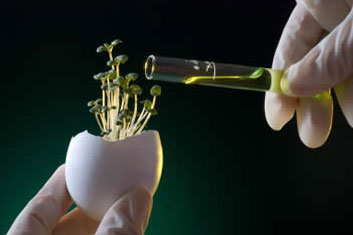
Eligibility: B.Sc Life science Subjects/ Biotechnology from recognised University/Institution.

Eligibility: Post graduation in Life Science Subjects from a recognised college/ university or M. Phil. Degree in the relevant discipline.
Applications are invited from eligible candidates for admission to the Doctor of Philosophy (Ph.D.) programme in the Department of Biotechnology, CUSAT, in accordance with the Ph.D. Regulations and Admission guidelines of CUSAT.
Last date for issue and submission of applications: 10 March, 2026 The rank list for PhD admissions 2026 is now available at https://www.cusat.ac.in/news.
Web Design by IDO Designs
